
The short answer
- Porta potty size depends on the model, so use its exterior dimensions rather than a general description of a standard unit.
- Door swing, the guest approach and space for a waiting line extend the usable area beyond the unit's footprint.
- Truck access depends on the entrance, turns, ground conditions and overhead obstructions along the route to the placement spot.
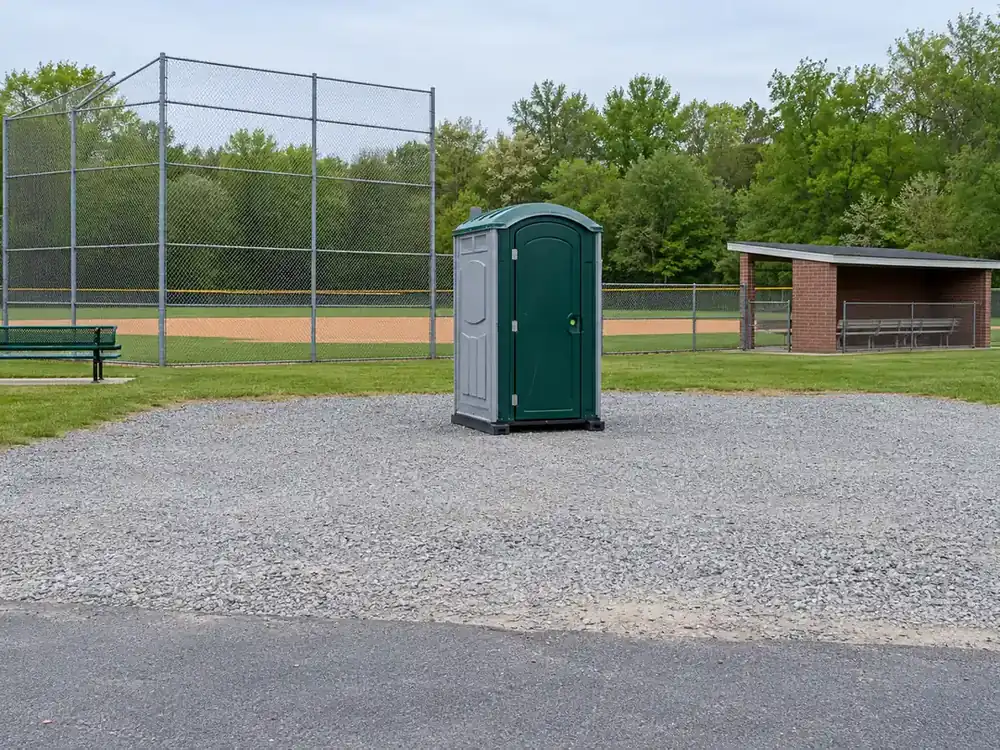
Space From the Street to the Pad
A narrow city driveway needs room for the approach as well as the restroom itself. Start the call with the gate, parked cars, turns and the patch where the unit would stand. Your service pro checks the real spot and the proposed model before settling the layout.
A Side Yard and the Unit Footprint
A triple-decker side yard needs more usable space than the outline of a closed unit. A footprint describes the width and depth occupied by the equipment. It does not account for a door opening toward a fence, someone waiting outside or a wash stand beside the entrance.
The manufacturer examples below show why portable restroom rentals need a model-specific layout. These dimensions describe named products, rather than equipment promised for your rental.
| Equipment example | Published dimensions | Space to discuss beyond the footprint |
|---|---|---|
| Standard portable toilet | Satellite Industries lists its Tufway as 44 inches wide and 48 inches deep. | Door swing, approach and waiting space |
| Wheelchair-accessible portable toilet | Satellite Industries gives its Liberty a width and depth of 62 inches. | Approach surface and maneuvering space |
| Freestanding wash stand | Satellite Industries lists the Breeze on its UK product page as 65 centimeters wide and 49 centimeters long. | Standing space at the basin and foot pump |
| Restroom trailer | BAUSS MFG lists the OCC1 at an overall length of 144 inches and overall width of 87.50 inches. | Entry setup, towing approach and turning space |
Near a reception lawn, portable bathroom rental planning also needs to account for the trailer's entry arrangement. Ask your delivery pro to distinguish the body dimensions from the full setup area. A trailer's published length alone does not settle the space needed beside its doors.
A Gate Between the Street and Back Yard
A tight gate needs a clear route beyond the opening, including space around corners. Share photographs of hinges, posts, steps and changes in surface during the call. Low branches and overhead wires belong in that discussion too; leave clearance decisions to your delivery pro.
For a portable restroom rental near a house, mention basement entrances, porch stairs and the path residents use. A unit beside the fence still needs a door that opens without blocking those routes. Never try to squeeze equipment through a gap yourself.
A Street With Resident Parking
A narrow street or one-way lane needs an approach the delivery truck can use without relying on a blocked driveway or sidewalk. Describe the direction of travel, parked vehicles and the turn into the lot. Your service pro evaluates the truck route separately from the unit footprint.
For portable restrooms near a school field, rental planning should keep the walking route separate from vehicle movement. Portable bathrooms for rent near a busy entrance need room for guests to pause without spilling into traffic. Include the wash stand and waiting line when describing the space.
A Firm Pad Beside the Work Area
A construction staging area needs a firm, level pad outside equipment routes. A pad is the prepared surface that supports the unit; a patch that looks open may still be soft or uneven. On a lawn after rain, ask your delivery pro to assess the ground and any surface protection needed.
Keep the placement clear of traffic, machinery, snow-plow lanes and overhead lines. A unit must never be moved, tipped, lifted or climbed on. Leave waste handling and pumping to your service pro, and report any need to change the placement.
At a lot with difficult access, the unit type, delivery approach and service access all affect the rental scope. A portable restroom partner in our network will explain how those conditions affect the price before placement is arranged. Call with the driveway or yard you are considering; measurements and photographs can be discussed during the conversation.