
The short answer
- OSHA's construction sanitation rule requires employee toilets; minimums follow workforce size, not portable unit model.
- Sites lacking sanitary sewers require permitted toilet facilities (the rule's sewer provisions), subject to local code restrictions.
- Mobile crews' exception requires readily available transportation to nearby toilets (the mobile-crew provision).
Worker Toilets, Washing and the Staging Yard
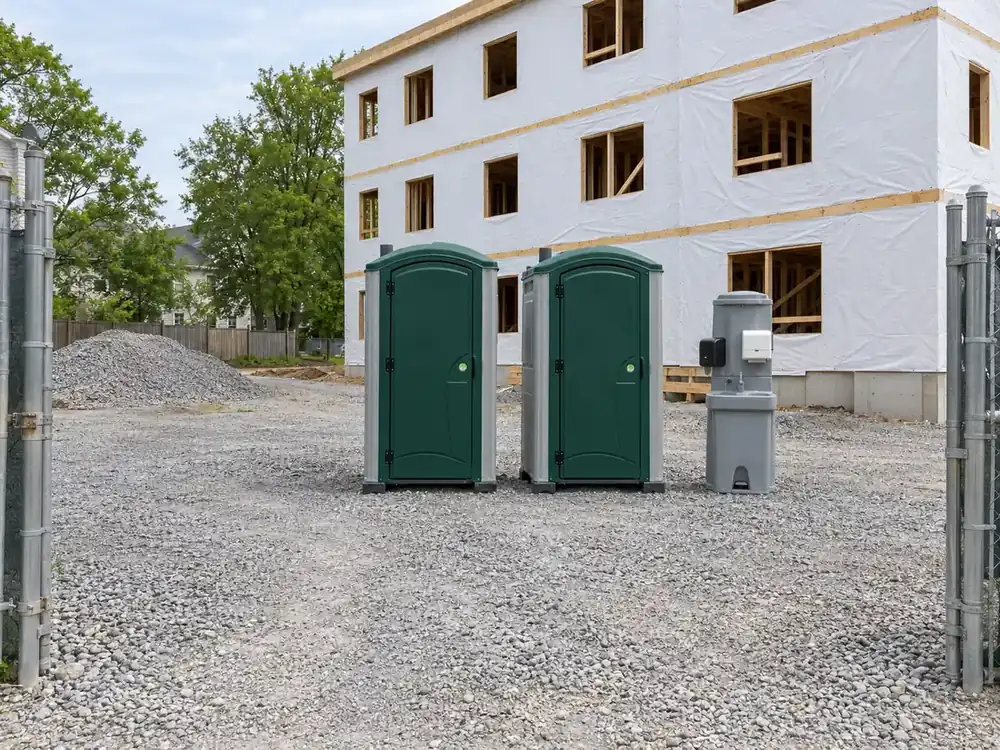
At a construction staging yard, plan employee toilet access alongside the space for the rental: federal OSHA sanitation requirements address construction employees and base toilet minimums on employee numbers. Share the work location, expected workforce and job duration during the call. Include the path workers will use and the approach the delivery truck must take.
Employee Numbers Set the Starting Point
The worksite's employee headcount determines the applicable row in Table D-1 of the sanitation rule, which specifies minimum facilities and distinguishes toilet seats from urinals. Ask the employer's safety lead to apply the table to the workforce. Explain changes in staffing as the project moves from demolition through finishing, so the rental plan accounts for the work ahead.
For temporary field conditions, the rule requires at least one toilet facility to be available. Treat the minimum as a starting point for discussion, then consider the walk from the active work area, shared access and the space around the doors.
Sewer Access and Mobile Work Locations
A site without a sanitary sewer must use a facility type listed in the sewer provision, including chemical or recirculating toilets, unless local codes prohibit the type. Describe existing restroom access to the safety lead rather than assuming a portable unit is always the required choice.
For mobile crews, paragraph (c) provides an exception when transportation is readily available to nearby toilets. Let the employer's safety lead or OSHA address how that exception applies to the actual work arrangement.
Washing Beside the Work Area
Worksite lavatories need running water at the temperatures specified by the washing provisions, soap or a similar cleansing agent, and an allowed method of drying hands. The same provisions address washing near work involving harmful contaminants and a separate exception for mobile crews or normally unattended locations with transportation to suitable nearby washing facilities.
Describe the tasks, water access and proposed wash-stand location during rental planning. Leave room to reach the basin without standing in the toilet doorway. Have the safety lead assess the proposed washing equipment against the work being performed.
The Pad and the Rental Arrangements
A firm, level pad and an unobstructed approach give the unit and delivery truck a practical place to work. Keep units away from moving equipment, traffic, overhead lines and snow-plow lanes. Do not climb on the unit or attempt to move, tip or lift it. Leave waste handling to your service pro.
| Site feature | Detail to settle during the call |
|---|---|
| Gate or driveway | The truck's approach and the route to the pad |
| Active staging area | A position clear of stored materials and moving equipment |
| Toilet doorway | Space for entry, exit and waiting without blocking a path |
| Changing work area | How placement and service access will be reviewed |
One of our local portable restroom partners will explain the proposed scope and price before placement. Discuss unit selection, service visits and pickup directly with your service pro; those arrangements need their own rental discussion. Bring questions about federal requirements to OSHA or the employer's safety lead, and questions about local construction or placement permission to the city or town building department. For the rental itself, call about construction-site portable toilets and describe the spot.