
The short answer
- A unit count starts with headcount and hours, then considers how many people will need toilets during busy periods.
- Food, drink and shared breaks shape expected use, so a race start needs different planning from a renovation crew.
- Accessible units, wash stands and the available ground belong in the layout alongside the toilet quantity.
People, Hours and Space for the Line
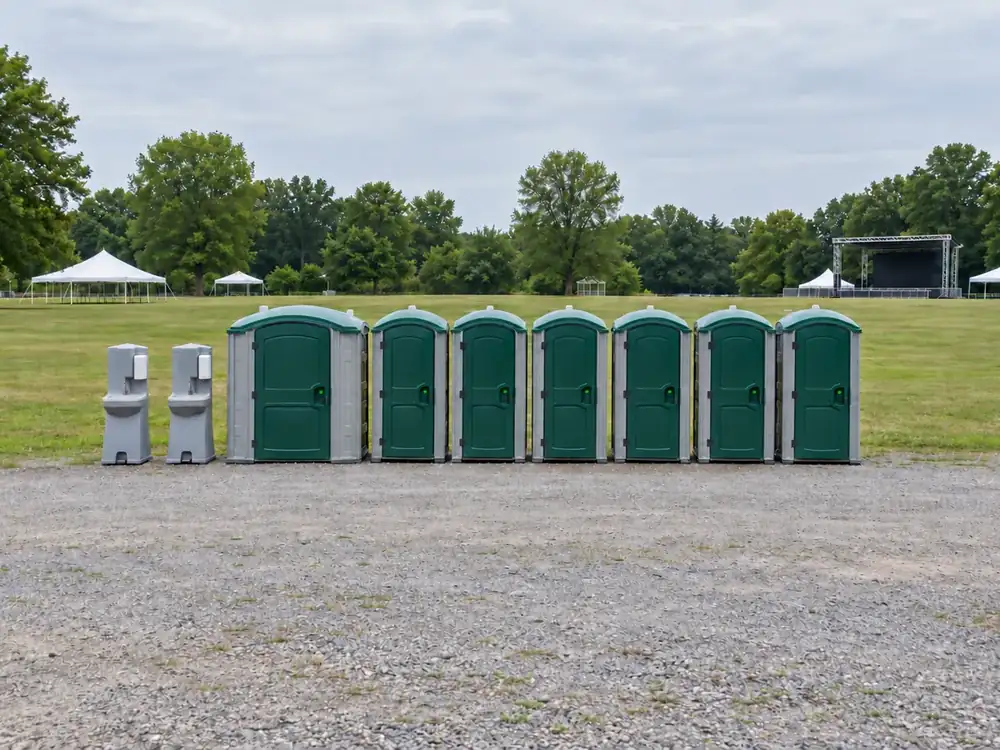
A work yard or event lawn needs a toilet plan based on attendance, hours and the way people gather. Headcount alone leaves out shared breaks, food and drink, and the space needed outside the doors. With the headcount, hours and food or drink details established, your service pro determines the final unit count. Call with the plans you have, even while attendance is developing.
Renovation Yards and Framing Crews
A triple-decker renovation needs toilets within reach of the work without narrowing the route for materials. Plan portable toilets for construction sites around the crew using them, overlapping trades and the working day. Describe the side passage, gate and proposed pad during the call.
A framing yard may have more open ground, but material stacks and equipment routes change as work advances. Keep a separate approach to the toilets and wash stand. Federal OSHA construction sanitation rules tie required toilet facilities to employee numbers; a guest attendance calculation does not replace that construction rule. Discuss service visits alongside the crew plan rather than assuming a schedule.
Street Fairs and Road-Race Starts
A street fair needs room for toilets and a waiting line outside the flow between stalls. Attendance over the whole event differs from the crowd present during a busy period. Include vendors, volunteers and event workers in the discussion, along with the hours they will be on site.
A road-race start concentrates use before runners set off. Explain when people arrive, where they wait and how spectators move around the start. A wash stand needs its own usable space near the toilets. Place the line where it will not cross the race route or block the accessible approach.
Wedding Lawns and Reception Paths
A portable toilet for a wedding needs a position guests can reach from the gathering without crossing the delivery approach. Share the ceremony and reception schedule, meal plans and drinks service when discussing the unit mix. For portable toilets at a wedding reception, allow waiting space away from dining and guest entrances.
Portable toilets for outdoor weddings also need ground that remains usable if the lawn gets wet. Discuss an accessible unit and the route to its door while choosing the standing area. The ADA Standards' accessible-route provisions address connections between accessible facilities and spaces on the same site; the approach deserves attention alongside the unit itself.
For weddings nearby, portable toilets should be planned around the actual venue layout rather than distance alone. A portable toilet near the wedding lawn still needs a clear path from the reception and room for service access.
Graduation Parties Behind the House
A backyard graduation party needs a layout that keeps the toilet approach clear of chairs, food tables and the gate. Tell your service pro whether guests will arrive gradually or stay together through a meal. Include the host's helpers when describing attendance and discuss handwashing alongside toilet use.
| Situation | Planning question |
|---|---|
| Renovation crew | Which trades share the yard and when do their shifts overlap? |
| Framing crew | Where can toilets remain clear of changing material stacks? |
| Street fair | Where will peak attendance gather, eat and queue? |
| Road race | When will runners and spectators need toilets around the start? |
| Wedding | How do the ceremony, meal and drinks affect guest use? |
| Graduation party | Do guests arrive in waves or stay through the gathering? |
Standing Areas and Later Changes
A firm, level patch must leave usable space at the doors and wash stand. Keep units away from traffic, moving equipment, snow-plow lanes and overhead lines. Never move, tip, lift or climb on a unit; contact your service pro about a different position. Waste handling and pumping belong to the service pro.
If attendance grows or the work schedule changes, call to discuss the unit plan and service visits. A portable restroom professional in our network will work through those changes and the scope and price before units are set.